Spaghetti Carbonara

Spaghetti Carbonara is a classic Italian pasta dish from Rome, made with eggs, cheese (Pecorino Romano or other cheese), pancetta (or guanciale), and black pepper. It’s creamy and rich, but traditionally, there’s no cream—just a silky sauce formed by the eggs and cheese.
Spaghetti Carbonara is one of Italy’s most beloved pasta dishes. Originating from Rome, this dish is known for its creamy texture and rich, savoury flavour. Made with simple yet high-quality ingredients, Carbonara showcases the beauty of traditional Italian cooking.
Simple Ingredients, Big Flavour
Carbonara has only a few ingredients. It includes spaghetti, eggs, pancetta, cheese, and black pepper. These ingredients create a perfect balance. The dish does not need cream. The eggs and cheese form a creamy sauce.
Traditional Carbonara consists of just a few key ingredients:
- Spaghetti – The classic pasta choice, though other shapes like rigatoni or fettuccine can work.
- Guanciale – Cured pork cheek, offering a rich and distinct flavour. You can substitute it with pancetta or bacon.
- Eggs – The base of the creamy sauce.
- Pecorino Romano – A sharp, salty cheese that enhances the dish’s taste.
- Black Pepper – Adds a bold, slightly spicy flavour.
Notably, authentic Carbonara does not include cream, as the creaminess comes from the eggs and cheese emulsifying with the pasta water.
How to Make Spaghetti Carbonara?
1. Cook the Pasta
Bring a large pot of salted water to a boil and cook the spaghetti until al dente. Reserve about a cup of pasta water before draining.
2. Prepare the Guanciale
Cut the guanciale into small pieces and cook it in a pan over medium heat until crispy. Remove from the heat and let it rest.
3. Mix the Sauce
In a bowl, whisk together eggs, grated Pecorino Romano, and freshly ground black pepper.
4. Combine Everything
Add the drained pasta to the pan with the guanciale (off the heat). Slowly mix in the egg and cheese mixture, stirring continuously. Add reserved pasta water gradually until the sauce becomes creamy and coats the pasta evenly.
5. Serve Immediately
Plate the pasta and garnish with extra Pecorino Romano and black pepper. Enjoy it while warm!
Tips for the Perfect Carbonara
- Use room-temperature eggs for a smooth sauce.
- Avoid direct heat when adding the egg mixture to prevent scrambling.
- Stir continuously to achieve a silky texture.
- Use freshly grated Pecorino Romano for the best flavour.
- Cook the pasta al dente to maintain texture.
- Al dente is an Italian term meaning “to the tooth.” It describes pasta that is cooked until it is firm to the bite rather than overly soft or mushy. This texture is ideal for Spaghetti Carbonara because it holds up well when mixed with the creamy sauce.
- Reserve enough pasta water to adjust the sauce consistency.
- Serve immediately, as Carbonara does not reheat well.
- Avoid direct heat when adding the egg mixture to prevent scrambling.
- Stir continuously to achieve a silky texture.
- Use freshly grated Pecorino Romano for the best flavour.
Variations and Substitutes
While traditional Carbonara has a strict ingredient list, some variations exist:
- Pancetta or Bacon instead of guanciale.
- Parmesan or Grana Padano instead of Pecorino Romano.
- Garlic or Onion (though not traditional) for added aroma.
Spaghetti Carbonara is a simple yet flavourful dish that exemplifies the essence of Italian cuisine. With just a handful of ingredients, it creates a rich and satisfying meal that has stood the test of time. Whether you’re making it traditionally or with slight variations, mastering Carbonara is a must for any pasta lover.
Enjoy our Baked Pasta with Minced Meat and Cheese, a hearty, cheesy comfort dish loaded with savoury meat sauce and perfectly melted golden cheese.


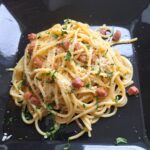
Spaghetti Carbonara
Ingredients
- 200 g spaghetti
- 160 g pancetta or guanciale or bacon, diced
- 2 large eggs + 1 yolk for extra creaminess
- 50 g Grana Padano or Pecorino Romano finely grated
- Freshly ground black pepper
- Salt for pasta water
Instructions
- Cook the pasta: Bring a large pot of salted water to a boil and cook the spaghetti until done. Reserve 1 cup of pasta water before draining.
- Cook the pancetta: In a pan over medium heat, cook the diced pancetta until crispy, about 4-5 minutes. Remove from heat.
- Prepare the sauce: In a heat-proof bowl, whisk the eggs, egg yolk, finely grated Grana Padano, and a generous amount of black pepper.
- Gently Heat the Sauce: Place the sauce bowl over the boiling pasta water, stirring continuously to warm the eggs gently and prevent scrambling.
- Combine Everything: Off the heat, add the drained pasta to the pan with the pancetta. Gradually mix the spaghetti into the egg and cheese mixture, incorporating reserved pasta water a little at a time until a smooth, creamy sauce forms.
- Serve: Plate immediately, topping with more grana Padano or Pecorino and black pepper.
Notes
Frequently Asked Questions
The key is to mix the egg and cheese mixture with the hot pasta off the heat while adding reserved pasta water gradually. This creates a silky, creamy sauce without scrambling the eggs.
Yes, Parmesan can be used, but Pecorino Romano or Grana Padano are more traditional and add a sharper, more authentic flavour.
The eggs were cooked too quickly due to high heat. To prevent this, remove the pan from the heat before adding the egg mixture and toss continuously with pasta water for a smooth texture.
Yes, you can substitute pancetta with guanciale (traditional), bacon, or even a vegetarian alternative like mushrooms for a different twist.
No, traditional carbonara does not contain cream. The creamy texture comes from the emulsion of eggs, cheese, and pasta water.
Reheat gently in a pan over low heat with a splash of water to prevent the eggs from scrambling. Avoid microwaving, as it can make the sauce clumpy.
Share Your Creations and Connect with Me on Social Media!
Have you tried this recipe? Don’t forget to tag me with your pictures on Instagram – I love to see your creations! 💕 Also, be sure to comment and rate below! Follow me on social media:
2 thoughts on “Spaghetti Carbonara”