Madeleines
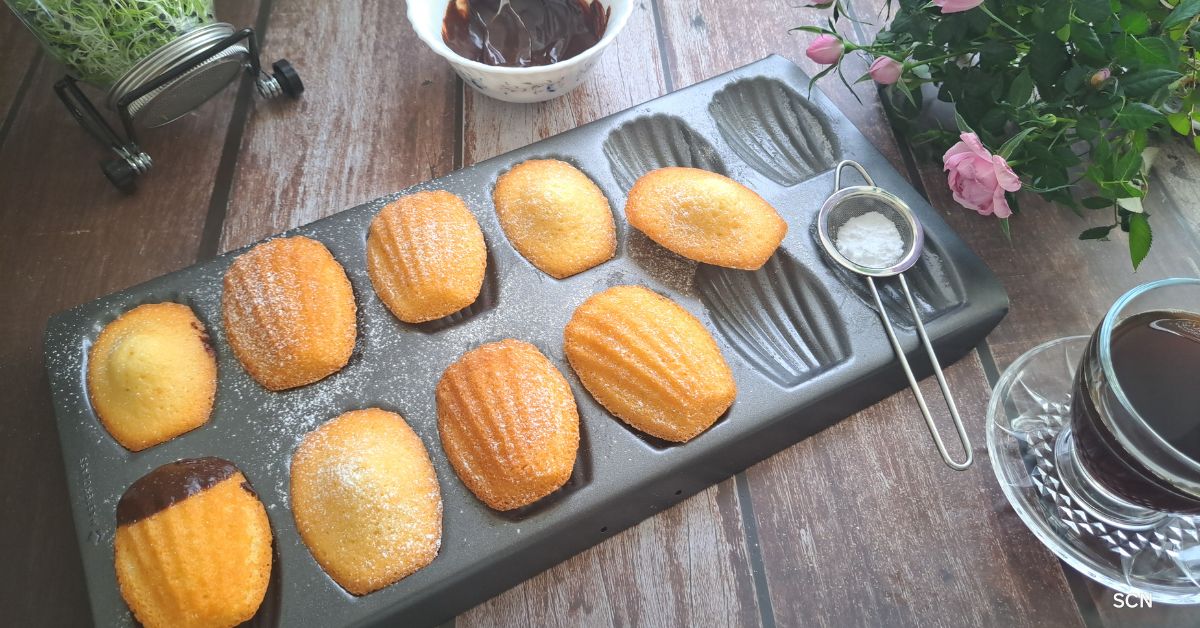
Madeleines are small, shell-shaped sponge cakes from France. They are famous for their light and tender crumb, delicate crisp edges, and a small “bump” or hump in the centre. Adding lemon zest gives them a fresh, bright flavour that is perfect for tea time, breakfast, or any special occasion. These little cakes look impressive but are surprisingly easy to make when you follow the right steps.
Why Lemon Madeleines Are Special
What makes lemon madeleines unique is their combination of texture and aroma. They are not too sweet and have a slightly crisp exterior with a soft, springy interior. The lemon zest adds a natural fragrance and taste that spreads evenly throughout the batter. Madeleines are also a perfect example of a simple French pastry that relies on careful technique rather than complicated ingredients.
Preparation
Before you start, it is important to weigh your egg without the shell. Use the same weight of sugar, flour, and butter as the egg. This ensures a balanced batter that is neither too dry nor too wet. You will also need a madeleine pan. Generously butter and flour it, then refrigerate it for at least two hours. Cold pans help the madeleines release easily and encourage the signature bump to form.
Step-by-Step Tips
Rubbing zest with sugar: Before adding the egg, rub lemon zest into the sugar to release the essential oils. This step gives your madeleines a stronger, evenly distributed lemon aroma.
Beating eggs and sugar: Beat the eggs and sugar until the sugar fully dissolves and the mixture becomes pale and slightly foamy. This incorporates air, which helps the madeleines rise in the oven.
Folding flour and butter: Sift the flour and baking powder twice. Fold the dry ingredients gently into the egg mixture until no dry streaks remain. Then add cooled melted butter (40–50°C) and fold until smooth. Avoid overmixing to keep the batter light.
Resting the batter: Chill the batter for 1-2 hours. Resting allows the flour to hydrate and creates the temperature contrast needed for the hump.
Achieving the Perfect Bump
The bump forms when cold batter meets a hot oven. The edges are set first, and the centre rises, creating a natural hump. Using a cold pan, properly beaten eggs, and rested batter all contribute to a pronounced, bakery-style bump.
Final Tips
Avoid overbaking to keep the madeleines moist.
Use a metal pan for better heat transfer and crisp edges.
Serve on the same day for the best flavour and texture.
Lemon madeleines are a delightful treat that anyone can enjoy baking. Once you’ve mastered them, explore more delicious cake recipes to expand your baking skills.




Madeleines
Ingredients
- 1 room temperature egg 56g
- 56 g unsalted butter melted
- 56 g all-purpose flour
- ½ tsp baking powder
- A pinch of salt
- 56 g fine-grain sugar
- Zest of one lemon
For Serving (Optional)
- Powdered sugar
- Chocolate sauce
Instructions
Important Note Before You Start
- Weigh your egg first (without shell).
- Whatever the egg weighs, use the same weight for butter, sugar and flour.
- (Example: if egg = 56g → use 56g each of butter, sugar, and flour.)
- This keeps the formula perfectly balanced.
Prepare the Pan (Do This First)
- Generously butter your madeleine pan, making sure to coat every ridge.
- Place the prepared pan in the fridge for 2 hours while you make the batter and refrigerate.
- After 2 hours, dust with flour and tap out the excess.
- Return the pan to the refrigerator until ready to use.
- Cold, well-buttered molds help create clean edges and a better bump.
Melt the Butter
- Melt the butter gently.56 g unsalted butter
- Allow it to cool to 40–50°C before adding to the batter.
- It should feel warm but not hot.
- If it’s too hot, it will deflate the egg mixture.
Release the Lemon Oils (Important Flavour Step)
- Place the lemon zest and sugar in a bowl.56 g fine-grain sugar, Zest of one lemon
- Rub them together with your fingertips or spoon for about 30–60 seconds until:
- The sugar feels slightly moist and the mixture becomes fragrant.
- This extracts and absorbs the essential oils into the sugar, intensifying the lemon aroma.
Prepare Dry Ingredients
- In a separate bowl add the flour, baking powder and a pinch of salt.56 g all-purpose flour, ½ tsp baking powder, A pinch of salt
- Sift twice and set aside.
- Beat Egg and Lemon Sugar1 room temperature egg
- Add the lemon sugar to the beaten egg and continue whisking until the sugar is fully dissolved and lightly foamy.
Combine
- Add the sifted dry ingredients to the beaten egg mixture.
- Gently fold until no dry streaks of flour remain.
- Do not overmix.
- Add the melted butter (40–50°C).
- Fold gently until fully incorporated and smooth.
- The batter should be glossy and slightly thick.
Rest the Batter (important)
- Cover and refrigerate for 1-2 hours.
- This improves texture and helps create the signature bump.
- Cold batter + cold pan + hot oven = better bump.
Bake
- Preheat oven to 180°C.
- Spoon or pipe the batter into the cold prepared molds, filling each about ¾ full.
- Do not spread it — let it settle naturally.
- Bake for 12 minutes.
- Done when the edges are golden, centers spring back lightly and a bump forms in the center.
- Remove from oven and let sit for 3 minutes.
- Gently loosen and transfer to a rack.
- Cool slightly before serving.
- Dust with powdered sugar and serve.Powdered sugar
- You can also serve them with the chocolate sauce.Chocolate sauce
- Best eaten the same day.
Notes
Frequently Asked Questions
Common reasons are that the oven wasn’t hot enough, the batter wasn’t rested, the pan wasn’t cold, the egg and sugar weren’t beaten enough, the butter was too hot and it deflated the batter.
For a good bump: cold batter + cold pan + hot oven.
Possible causes are overmixing after adding flour, sugar not fully dissolved, butter added too hot and not enough aeration when beating egg and sugar.
The batter should be pale, slightly thickened, and smooth before adding dry ingredients.
You can, but the texture and bump may suffer.
Resting hydrates the flour, improves the structure and enhances oven spring.
Rubbing releases essential oils from the zest.
Sugar absorbs those oils, intensifying flavour and distributing aroma evenly throughout the batter.
If butter is too hot, it deflates the beaten egg mixture, and it can partially cook the egg.
Warm (not hot) butter ensures proper emulsification.
You can, but metal pans give better heat transfer. Edges become crisper. Bump formation is stronger.
Silicone moulds often produce flatter madeleines.
Madeleines are best eaten the same day.
If needed, store in an airtight container at room temperature and consume within 24 hours.
They dry out faster than most cakes.
Share Your Creations and Connect with Me on Social Media!
Have you tried this recipe? Don’t forget to tag me with your pictures on Instagram – I love to see your creations! 💕 Also, be sure to comment and rate below! Follow me on social media:
1 thought on “ Madeleines”