Pazham Pradhaman (Kerala Style Banana Payasam)
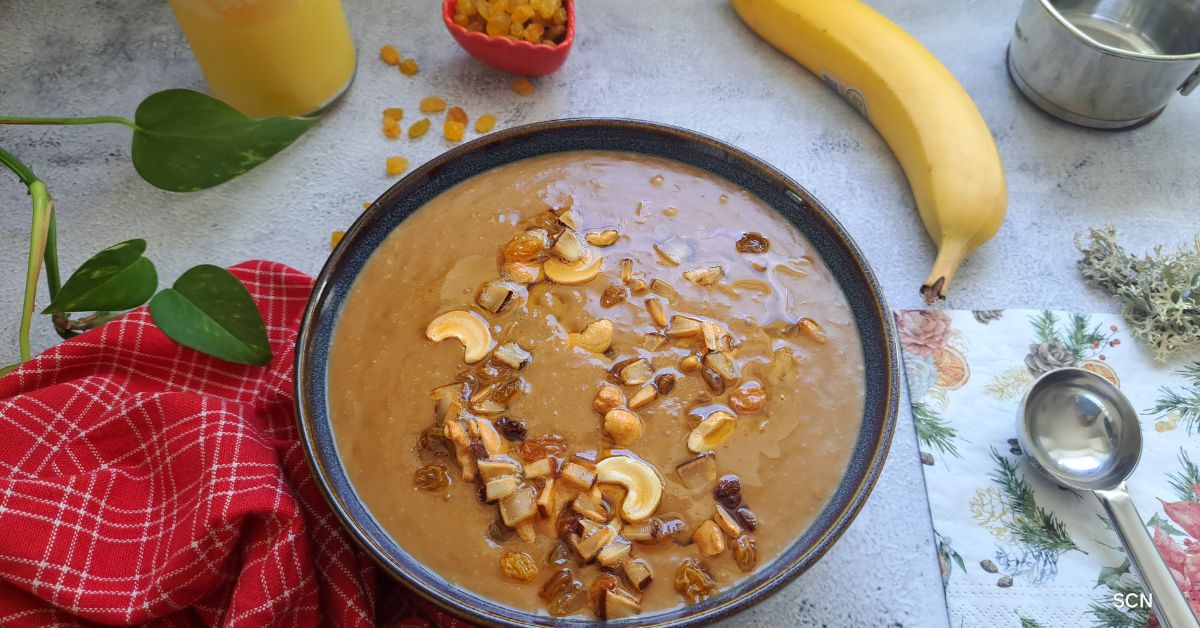
Pazham Pradhaman is a classic Kerala dessert that brings together the natural sweetness of ripe bananas, the richness of jaggery, and the creamy goodness of coconut milk. This traditional payasam has a special place in Kerala cuisine and is often prepared during festivals, celebrations, and family gatherings. The smooth texture, deep golden colour, and warm aroma of ghee and spices make Pazham Pradhaman a truly comforting dessert.
Unlike many modern desserts, Pazham Pradhaman gets its sweetness from simple, natural ingredients. Ripe Nendran bananas, traditional jaggery, fresh coconut milk, and aromatic spices create a delicious combination that represents the flavours of Kerala. Each spoonful offers a perfect balance of sweetness, richness, and traditional taste.
What is Pazham Pradhaman?
Pazham Pradhaman is a Kerala-style payasam made using ripe Nendran bananas cooked with jaggery and coconut milk. The word “pazham” means banana, and “pradhaman” refers to a rich type of payasam prepared with a main ingredient, sweetener, and coconut milk. Unlike milk-based payasams, Pazham Pradhaman uses coconut milk, which gives it a unique flavour and creamy consistency.
Traditionally, people prepare Pazham Pradhaman in a heavy-bottomed pan or a traditional uruli. Slow cooking allows the bananas and jaggery to blend beautifully, creating a rich and glossy dessert. The addition of ghee-roasted coconut pieces, cashews, and raisins adds a wonderful texture and enhances the overall taste.
The Importance of Coconut in Kerala Cuisine
Coconut plays an important role in Kerala’s food culture. From everyday meals to festive dishes, coconut appears in many forms, including grated coconut, coconut oil, and fresh coconut milk. The warm climate of Kerala supports the growth of coconut trees, making coconut an essential ingredient in traditional cooking.
Freshly extracted coconut milk gives Pazham Pradhaman its authentic taste and creamy texture. The first extract, also known as thick coconut milk, provides richness, while the second extract, or thin coconut milk, helps cook the dessert and blend all the flavours together. This traditional method of using coconut milk creates the signature taste of Kerala payasams.
If you enjoy traditional Kerala desserts, you may also like Ada Pradhaman, another popular festive payasam made with rice ada, jaggery, and coconut milk.
Preparing Nendran Bananas for Pazham Pradhaman
The key ingredient in Pazham Pradhaman is ripe Nendran banana. Choosing fully ripe bananas is important because they provide natural sweetness, a beautiful colour, and a rich flavour. Cook the bananas until soft and then mashed into a smooth paste before combining with jaggery.
You can cook the bananas by sautéing them with a little ghee or by steaming them until tender. Sautéing the bananas in ghee enhances their flavour and adds a traditional aroma to the dessert. Once cooked, the bananas are combined with melted jaggery and cooked until the mixture becomes thick, glossy, and leaves the sides of the pan.
The slow cooking process allows the banana and jaggery flavours to develop fully. Adding spices like cardamom and dry ginger powder gives the dessert a warm and fragrant finish.
How to Make Pazham Pradhaman
After preparing the banana-jaggery mixture, add the thin coconut milk and simmer it gently until the payasam reaches the desired consistency. Then add the thick coconut milk and heat it gently to maintain a smooth, creamy texture. Do not boil the payasam after adding the thick coconut milk, as it may separate.
Finish the pradhaman with a simple garnish. Roast coconut pieces, cashews, and raisins in ghee until golden, then add them to the payasam. This traditional garnish adds crunch, richness, and a festive touch.
If you love Kerala-style payasams, do not miss trying Parippu Payasam (Paruppu Payasam), a delicious dessert made with roasted moong dal, jaggery, and coconut milk. It is another must-try recipe for special occasions and celebrations.
Tips for Making the Best Pazham Pradhaman
Use fresh and fully ripe Nendran bananas for the best results. Good-quality jaggery improves the flavour and colour of the dessert. Freshly extracted coconut milk creates a richer taste compared to packaged coconut milk.
Cook the banana and jaggery mixture patiently on low to medium heat. This step helps develop the deep flavour and thick texture that make Pazham Pradhaman special. Always add thick coconut milk at the end and heat gently to maintain a smooth consistency.
Pazham Pradhaman tastes delicious when served warm, at room temperature, or slightly chilled. The flavours become even better after resting for a few hours.
Try More Traditional Kerala Desserts
Explore more traditional Kerala dessert recipes and discover more delicious flavours from Kerala’s culinary heritage. Try festive favourites like Ada Pradhaman, Paruppu Payasam, and other classic sweets to complete your Kerala dessert collection.

Pazham Pradhaman (Kerala Style Banana Payasam)
Ingredients
- 2 large 350g ripe Nendran bananas, peeled and cut into small pieces
- 1½ cups 180-200g Jaggery powder (adjust sweetness)
- 1 cup thick coconut milk first extract
- 2 cups thin coconut milk second extract
- 3 tbsp Ghee divided
- ¼ tsp Cardamom powder
- ⅛ tsp Dry ginger powder chukku, (optional)
- A pinch of salt
Garnish
- 2 tbsp ghee
- 10-12 Cashews
- 2 tbsp Coconut pieces coconut bits/thengakothu
- 1 tbsp Raisins
Instructions
Cook the Bananas
- You can cook the bananas using either of these methods:
Method 1 – Sauté
- Heat 2 tablespoons of ghee in a heavy-bottomed pan.3 tbsp Ghee
- Add the banana pieces and cook over medium heat, stirring occasionally, until they become soft and mashable.2 large
Method 2 – Steam
- Steam the banana pieces until completely soft.
- Mash them into a smooth paste. Remove the inner black fibre if desired for a smoother texture.
Prepare the Jaggery
- Add the jaggery powder to a small pan with just enough water to dissolve it.1½ cups 180-200g Jaggery powder (adjust sweetness)
- Heat until melted, then strain to remove any impurities.
- Tip: If you're using clean, good-quality jaggery powder, you can add it directly to the cooked bananas without making a syrup.
Cook the Banana-Jaggery Mixture
- Lightly mash the cooked bananas in the pan.
- Add the jaggery syrup (or jaggery powder) and mix well.
- Cook over medium heat until the mixture becomes thick, glossy, and starts leaving the sides of the pan.
- Add one tablespoon of ghee and continue cooking for another 8–10 minutes, stirring frequently.
Add the Coconut Milk* see notes
- Pour in the thin coconut milk, mix well and simmer gently until the mixture thickens slightly.2 cups thin coconut milk
- Stir in the cardamom powder, dry ginger powder (if using), and a pinch of salt.¼ tsp Cardamom powder, 1/8 tsp Dry ginger powder, A pinch of salt
- Reduce the heat to low and add the thick coconut milk.1 cup thick coconut milk
- Heat gently until just hot. Do not allow it to boil after adding the thick coconut milk, as it may curdle.
Prepare the Garnish
- Heat the ghee in a small pan.2 tbsp ghee
- Fry the coconut pieces until golden brown.2 tbsp Coconut pieces
- Add the cashews and fry until golden.10-12 Cashews
- Finally, add the raisins and cook until they puff up.1 tbsp Raisins
- Pour the entire garnish over the prepared pradhaman and mix gently.
- Serve warm, at room temperature, or slightly chilled.
Notes
-
- Add freshly grated coconut to a blender with a small amount of warm water.
- Blend well and squeeze the mixture through a fine strainer or muslin cloth to extract the first, thick coconut milk.
- Keep this aside and add it only at the end of cooking.
-
- Add more warm water to the leftover coconut pulp after the first extraction.
- Blend again and squeeze to extract a thinner coconut milk.
- Use this for simmering and cooking the pradhaman before adding the thick coconut milk.
- Use fully ripe Nendran bananas for the best flavour, colour, and aroma.
- Cooking in a heavy-bottomed pan or a traditional uruli gives a richer taste and helps prevent scorching.
- Adjust the amount of jaggery depending on the natural sweetness of the bananas.
- Stir frequently once the jaggery is added to prevent the mixture from sticking to the bottom of the pan.
Frequently Asked Questions
Pazham Pradhaman is a traditional Kerala dessert made with ripe Nendran bananas, jaggery, coconut milk, and ghee. It is a type of payasam commonly prepared for festivals and celebrations.
Ripe Nendran bananas are the best choice as they provide the authentic flavour, natural sweetness, and rich texture needed for this dessert.
Yes, you can use other ripe bananas, but the taste and texture will differ. Nendran bananas give Pazham Pradhaman its traditional Kerala flavour.
For 350 g ripe Nendran bananas, use around 175–200 g jaggery for balanced sweetness. Adjust according to the sweetness of the bananas and your preference.
Yes, canned coconut milk can be used. For the best traditional taste, freshly extracted coconut milk is preferred.
Thick coconut milk can split or curdle when boiled. Add it at the end and heat gently to maintain a smooth, creamy texture.
It can be stored in the refrigerator for 2–3 days in an airtight container. Reheat gently before serving or enjoy at room temperature.
Ghee adds richness and enhances the traditional flavour, but you can reduce the amount or use a small quantity according to your preference.
Cook the banana-jaggery mixture longer before adding coconut milk. The pradhaman naturally thickens as it cools, so avoid adding too much liquid.
Yes, you can prepare it a day in advance. The flavours often deepen after resting, making it even more delicious.
Share Your Creations and Connect with Me on Social Media!
Have you tried this recipe? Don’t forget to tag me with your pictures on Instagram – I love to see your creations! 💕 Also, be sure to comment and rate below! Follow me on social media: