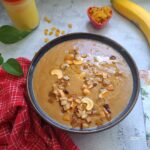
Pazham Pradhaman (Kerala Style Banana Payasam)
Pazham Pradhaman is a traditional Kerala dessert made with ripe Nendran bananas, jaggery, coconutmilk, and ghee. It is commonly served during Onam sadya and other festive occasions.
Ingredients
- 2 large 350g ripe Nendran bananas, peeled and cut into small pieces
- 1½ cups 180-200g Jaggery powder (adjust sweetness)
- 1 cup thick coconut milk first extract
- 2 cups thin coconut milk second extract
- 3 tbsp Ghee divided
- ¼ tsp Cardamom powder
- ⅛ tsp Dry ginger powder chukku, (optional)
- A pinch of salt
Garnish
- 2 tbsp ghee
- 10-12 Cashews
- 2 tbsp Coconut pieces coconut bits/thengakothu
- 1 tbsp Raisins
Instructions
Cook the Bananas
- You can cook the bananas using either of these methods:
Method 1 – Sauté
- Heat 2 tablespoons of ghee in a heavy-bottomed pan.3 tbsp Ghee
- Add the banana pieces and cook over medium heat, stirring occasionally, until they become soft and mashable.2 large
Method 2 – Steam
- Steam the banana pieces until completely soft.
- Mash them into a smooth paste. Remove the inner black fibre if desired for a smoother texture.
Prepare the Jaggery
- Add the jaggery powder to a small pan with just enough water to dissolve it.1½ cups 180-200g Jaggery powder (adjust sweetness)
- Heat until melted, then strain to remove any impurities.
- Tip: If you're using clean, good-quality jaggery powder, you can add it directly to the cooked bananas without making a syrup.
Cook the Banana-Jaggery Mixture
- Lightly mash the cooked bananas in the pan.
- Add the jaggery syrup (or jaggery powder) and mix well.
- Cook over medium heat until the mixture becomes thick, glossy, and starts leaving the sides of the pan.
- Add one tablespoon of ghee and continue cooking for another 8–10 minutes, stirring frequently.
Add the Coconut Milk* see notes
- Pour in the thin coconut milk, mix well and simmer gently until the mixture thickens slightly.2 cups thin coconut milk
- Stir in the cardamom powder, dry ginger powder (if using), and a pinch of salt.¼ tsp Cardamom powder, 1/8 tsp Dry ginger powder, A pinch of salt
- Reduce the heat to low and add the thick coconut milk.1 cup thick coconut milk
- Heat gently until just hot. Do not allow it to boil after adding the thick coconut milk, as it may curdle.
Prepare the Garnish
- Heat the ghee in a small pan.2 tbsp ghee
- Fry the coconut pieces until golden brown.2 tbsp Coconut pieces
- Add the cashews and fry until golden.10-12 Cashews
- Finally, add the raisins and cook until they puff up.1 tbsp Raisins
- Pour the entire garnish over the prepared pradhaman and mix gently.
- Serve warm, at room temperature, or slightly chilled.
Notes
*Extracting Thick and Thin Coconut Milk
For thick coconut milk (first extract):
-
- Add freshly grated coconut to a blender with a small amount of warm water.
- Blend well and squeeze the mixture through a fine strainer or muslin cloth to extract the first, thick coconut milk.
- Keep this aside and add it only at the end of cooking.
-
- Add more warm water to the leftover coconut pulp after the first extraction.
- Blend again and squeeze to extract a thinner coconut milk.
- Use this for simmering and cooking the pradhaman before adding the thick coconut milk.
- Use fully ripe Nendran bananas for the best flavour, colour, and aroma.
- Cooking in a heavy-bottomed pan or a traditional uruli gives a richer taste and helps prevent scorching.
- Adjust the amount of jaggery depending on the natural sweetness of the bananas.
- Stir frequently once the jaggery is added to prevent the mixture from sticking to the bottom of the pan.