Kerala-Style Prawn Biryani
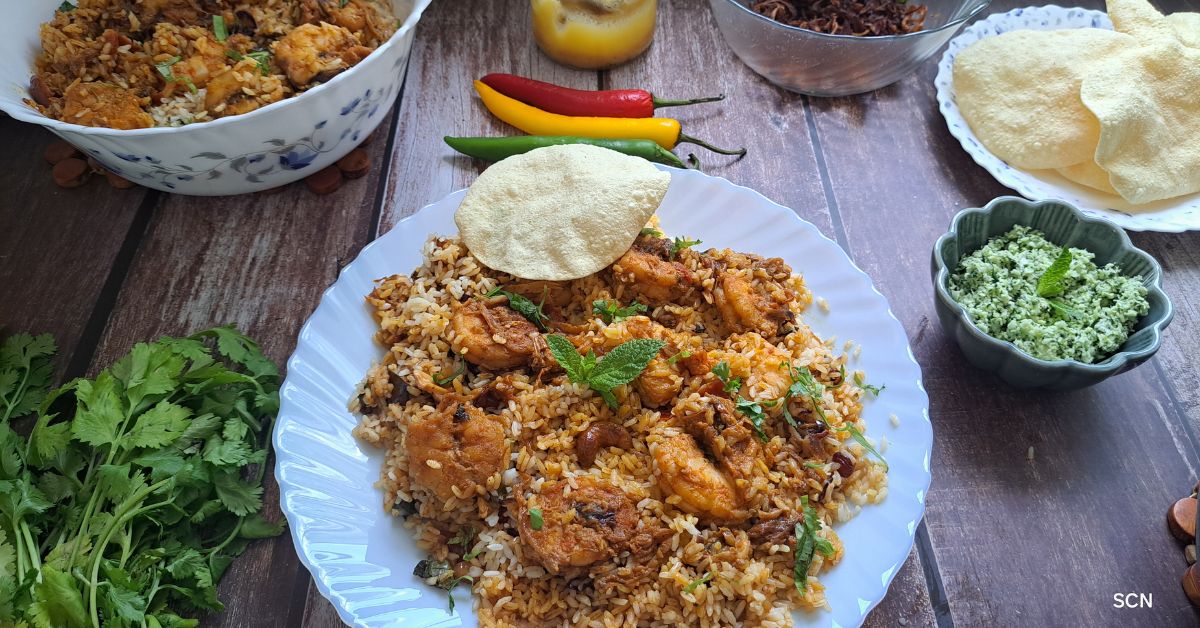
Kerala-Style Prawn Biryani is a delicious and aromatic seafood biryani that brings together the rich flavours of Kerala cuisine with perfectly cooked prawns, fragrant rice, and traditional spices. This authentic Malabar-style biryani uses Jeerakasala (Kaima) rice, which gives the dish its unique aroma, delicate texture, and classic Kerala biryani taste. Each grain of rice absorbs the flavours of the prawn masala, fresh herbs, and warm spices, creating a comforting meal that is perfect for family gatherings, celebrations, and special occasions.
Unlike many North Indian biryanis, Kerala biryanis have their own unique cooking style. They use locally loved ingredients such as coconut oil, fresh mint, coriander, fried onions, and aromatic spices. The combination of juicy prawns and flavourful rice makes this Kerala prawn biryani a must-try dish for seafood lovers.
About Kerala-Style Prawn Biryani
Kerala has a rich tradition of making different varieties of biryani, especially in the Malabar region. South Indian biryanis are known for their distinct flavours, regional ingredients, and cooking techniques. From Malabar biryani to Thalassery biryani, each variety has its own special character.
Kerala-style prawn biryani stands out because of its light yet flavourful spice profile. The prawns cook quickly and absorb the delicious masala made with ginger, garlic, green chillies, tomatoes, yoghurt, mint, coriander, and aromatic spices. The final dum cooking process allows the rice and prawn masala to blend together, creating a biryani filled with irresistible aroma and taste.
Ingredients That Make This Biryani Special
The secret to an authentic Kerala prawn biryani lies in choosing the right ingredients. This recipe uses Jeerakasala rice, also known as Kaima rice, which is traditionally used in many Kerala biryanis. The small aromatic grains absorb the flavours beautifully while maintaining a soft and fluffy texture.
Fresh prawns add a natural sweetness and seafood flavour to the biryani. Whole spices such as cardamom, cloves, cinnamon, mace, and star anise create a warm aroma, while fresh mint and coriander add brightness to every bite. Fried onions, roasted cashews, and ghee bring richness and a festive touch to the dish.
Preparation and Cooking Process
Preparing Kerala-style prawn biryani requires a few simple steps, but each step adds depth and flavour to the final dish. Start by deveining and cleaning the prawns. Fry the onions and keep it ready.
Next, prepare the prawn masala by sautéing whole spices, ginger, garlic, green chillies, tomatoes, and powdered spices. Add yoghurt, fresh herbs, and prawns to create a flavourful masala base. Cook the prawns carefully because they need only a short cooking time to remain tender and juicy.
The Jeerakasala rice is cooked separately until it is almost done. The rice is then layered with the prawn masala, fried onions, mint, coriander, cashews, raisins, and ghee. Finally, the biryani cooks on dum, allowing the steam to bring all the flavours together. This slow cooking method creates perfectly aromatic rice with tender prawns in every serving.
Tips for the Perfect Prawn Dum Biryani
For the best results, use fresh prawns whenever possible and avoid overcooking them. Make sure the rice and prawn masala are hot while layering so the dum process creates enough steam and helps the flavours combine properly.
Using coconut oil adds an authentic Kerala touch, while ghee enhances the richness of the biryani. Let the biryani rest for a few minutes after dum cooking before opening the lid. This allows the flavours to settle and makes the rice easier to fluff.
A Perfect Dish for Every Occasion
Kerala-style prawn biryani is a wonderful choice for weekend lunches, festive meals, family celebrations, and dinner parties. Serve it with onion-cucumber raita, pudina chammanthi, pappadam, pickle, and fresh lemon wedges for a complete Kerala-style feast.
If you enjoy flavourful rice dishes, don’t forget to explore our other varieties of rice recipes, including different biryanis, pulao recipes, and traditional South Indian rice dishes. Try a new rice recipe and bring more delicious flavours to your kitchen!



Kerala-Style Prawn Biryani
Ingredients
- 500-600 g medium or large prawns deveined and cleaned
- 2 tbsp oil
- 1 tbsp ghee
- Whole garam masala 2 cardamom, 2 cloves, 1 bay leaf, 1 inch size cinnamon, Half a mace, 1 star anise
- 3 onions thinly sliced
- 3 tomatoes thinly sliced
- 2 green chillies
- 6 garlic cloves
- 2 inch size ginger
- 1 ½ tbsp curd
- ½ tsp turmeric powder
- 1 tbsp Kashmiri chilli powder
- 1 tsp black pepper
- 1 tsp garam masala
- Salt to taste
- 1 cup chopped coriander leaves
- ½ cup chopped mint leaves
- Oil for frying onions
For the rice
- 2 cups (400g) Jeerakasala Kaima rice
- 3 cups hot water
- 2 tbsp oil
- 1 tsp ghee
- 2 cloves
- 2 green cardamoms
- 1- inch cinnamon
- 2 tbsp fried onion
- 1 tbsp chopped coriander leaves
- ½ tbsp chopped mint leaves
- Juice of half a lemon
- Salt
For layering
- Fried onions from 4 onions
- 2 tbsp chopped mint
- 2 tbsp chopped coriander
- 2 tbsp ghee
- 10 –12 cashews
- 15 –20 raisins
Instructions
Prepare the Garnishes
- Heat oil in a deep pan and fry the thinly sliced onions until golden brown and crisp. Remove and drain on a paper towel.Oil, 3 onions
- In the same oil, fry the cashews until lightly golden. Remove and set aside.10 –12 cashews
- Fry the raisins until they puff up. Remove immediately and set aside.15 –20 raisins
- Crush the garlic, ginger, and green chillies using a mortar and pestle. Keep aside.2 green chillies, 6 garlic cloves, 2 inch size ginger
Prepare the Prawn Masala
- Heat 2 tablespoons of the reserved onion-frying oil and 1 tablespoon ghee in a heavy-bottomed pan.1 tbsp ghee, 2 tbsp oil
- Add the whole garam masala (cardamom, cloves, bay leaf, cinnamon, mace, and star anise). Sauté for about 30 seconds until fragrant.Whole garam masala
- Add the crushed ginger, garlic, and green chilies. Sauté for 1 minute until the raw aroma disappears.
- Add the sliced tomatoes, cover, and cook until soft and mushy.3 tomatoes
- Reduce the heat and add the turmeric powder, Kashmiri chilli powder, black pepper, salt and garam masala. Sauté for 1–2 minutes until the spices are well roasted.½ tsp turmeric powder, 1 tbsp Kashmiri chilli powder, 1 tsp black pepper, 1 tsp garam masala, Salt
- Stir in the curd and mix well.1 ½ tbsp curd
- Add three-fourths of the fried onions, followed by the chopped coriander and mint leaves. Mix well.1 cup chopped coriander leaves, ½ cup chopped mint leaves
- Add the prawns and salt. Mix gently, cover, and cook for 4–5 minutes. Do not overcook the prawns, as they will continue cooking during the dum process.500-600 g medium or large prawns
Cook the Jeerakasala Rice
- In another heavy-bottomed pan, heat 2 tablespoons of the reserved onion-frying oil and 1 teaspoon ghee.1 tsp ghee, 2 tbsp oil
- Add the cloves, cardamom, and cinnamon. Sauté for about 30 seconds.2 cloves, 2 green cardamoms, 1- inch cinnamon
- Add the washed and drained Jeerakasala rice along with the fried onions, chopped coriander, chopped mint, and salt. Gently sauté for 1 minute.Salt to taste, 2 cups (400g) Jeerakasala, 2 tbsp fried onion, 1 tbsp chopped coriander leaves, ½ tbsp chopped mint leaves
- Pour in 3 cups of hot water and add the juice of half a lemon.3 cups hot water, Juice of half a lemon
- Cover and cook over medium heat for 7–8 minutes, or until the rice is about 90% cooked and the water has been absorbed. Remove from the heat.
Layer the Biryani
- Keep the prawn masala in the same heavy-bottomed pan used for cooking it.
- Spread a layer of the cooked rice over the prawn masala.
- Sprinkle some fried onions, chopped coriander, chopped mint, roasted cashews, fried raisins, and drizzle a little ghee.Fried onions, 2 tbsp chopped mint, 2 tbsp chopped coriander, 2 tbsp ghee
- Repeat the layers until all the rice has been used, finishing with the garnish on the top layer.
- Note: Make sure both the prawn masala and the cooked rice are hot while layering the biryani. This helps create enough steam during baking and ensures the rice absorbs the flavours properly.
Dum Cooking
- Cover the pot tightly with a lid or seal it with aluminum foil.
- Place the pot over a hot tawa (griddle) and cook on low heat for 20 minutes.
- Remove from the heat and let the biryani rest, covered, for 20 minutes.
- Gently fluff the rice before serving.
Serving Suggestions
- Serve hot with onion-cucumber raita, pudina chammanthi, crispy pappadam, lemon or dates pickle, fresh lemon wedges, and a boiled egg if desired.
Notes
- Jeerakasala rice absorbs less water than basmati, so avoid overcooking it.
- Avoid over-frying the prawns, as they cook further during the dum stage.
- Fresh mint and fried onions are key to the characteristic Malabar aroma.
Frequently Asked Questions
Yes. While Jeerakasala (Kaima) rice gives this biryani its authentic Kerala flavour and aroma, basmati rice is a good substitute. Adjust the water ratio and cooking time accordingly.
Yes. Thaw the prawns completely, pat them dry with paper towels, and use them as directed in the recipe. Removing excess moisture helps the prawns sear better and prevents a watery masala.
Cook the prawns only until they turn pink and opaque. They will continue to cook during the dum process, so avoid overcooking them in the masala.
Yes. In fact, Kerala-style prawn biryani tastes even better as it sits, as the flavours have more time to blend and develop. You can prepare it a few hours ahead, allowing the rice to absorb the aromatic spices and prawn masala beautifully. Reheat gently or keep it on low heat before serving to enjoy the best texture and flavour.
This biryani pairs well with onion-cucumber raita, pudina chammanthi, pappadam, lemon or dates pickle, fresh lemon wedges, and a boiled egg.
Yes. Although dum cooking enhances the aroma and allows the flavors to blend beautifully, you can serve the biryani immediately after layering if you’re short on time.
Yes. You can bake the biryani instead of using the traditional stovetop dum method. After layering the rice and prawn masala, cover the pot tightly with an oven-safe lid or aluminum foil and bake in a preheated oven at 180°C for 20–25 minutes. Allow it to rest for 10 minutes before opening. Baking helps seal in the steam and allows the flavours to blend beautifully, giving the biryani a delicious dum-style finish.
Store leftovers in an airtight container in the refrigerator for up to 2 days. Reheat gently in a covered pan over low heat with a tablespoon of water or in the microwave until heated through.
Absolutely. Increase the number of green chillies, include a little hot chilli powder if you prefer a spicier biryani.
Yes. Coconut oil adds a traditional Kerala flavour and pairs wonderfully with seafood biryani. You can also use a combination of coconut oil and ghee for richer flavour.
Mushy rice is usually caused by using too much water or overcooking the rice before dum. Cook the rice until it is about 90% done so it finishes cooking perfectly during the final steaming stage.
Share Your Creations and Connect with Me on Social Media!
Have you tried this recipe? Don’t forget to tag me with your pictures on Instagram – I love to see your creations! 💕 Also, be sure to comment and rate below! Follow me on social media:
1 thought on “Kerala-Style Prawn Biryani”