Kerala Pudina Chammanthi
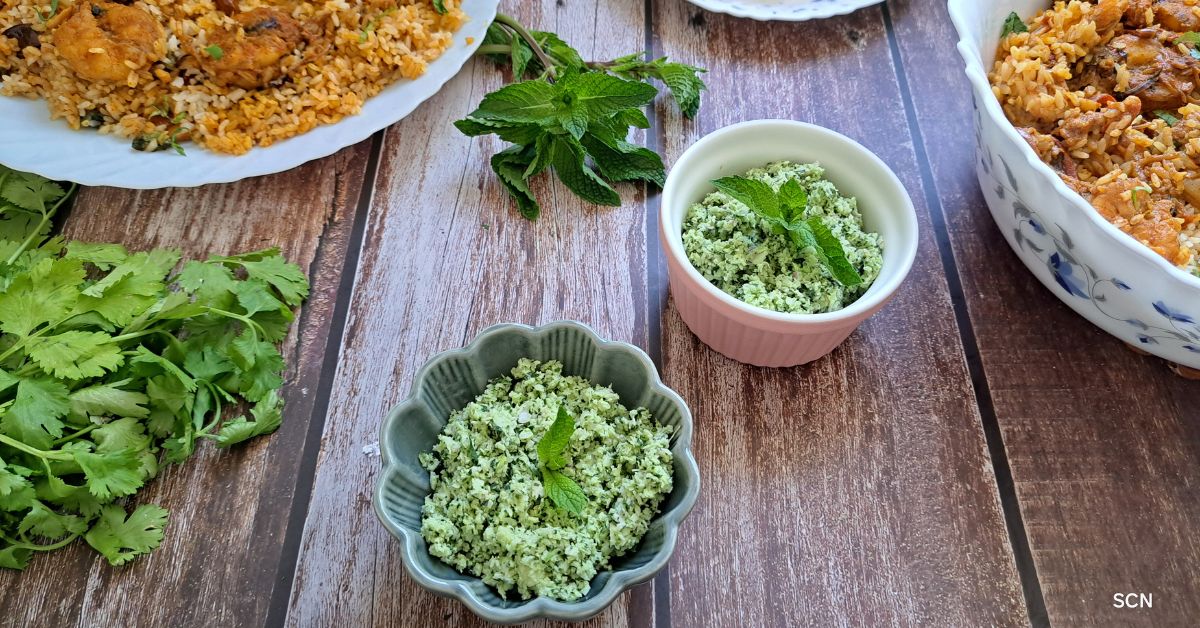
Kerala Pudina Chammanthi is a simple yet delicious traditional Kerala-style coconut mint chutney made with fresh pudina leaves, grated coconut, green chillies, ginger, shallots, and a few everyday ingredients. This flavourful chammanthi has a refreshing mint aroma, mild spice, and a hint of tanginess that makes it a perfect side dish for biryani, rice dishes, dosa, idli, and many South Indian meals.
Unlike smooth chutneys, Kerala chammanthi has a rustic and coarse texture. The ingredients are traditionally crushed or ground just enough to combine, allowing the fresh flavours of coconut and mint to shine through. This easy pudina chammanthi recipe brings the authentic taste of Kerala into your kitchen with minimal preparation and simple ingredients.
My First Taste of Kerala Pudina Chammanthi
I first tasted this Kerala Pudina Chammanthi during a visit to a Calicut restaurant in Dubai. It was served alongside a flavourful biryani, and I instantly loved the freshness it added to the meal. The combination of cool mint, creamy coconut, mild heat from green chillies, and a slight tanginess perfectly balanced the rich spices of the biryani.
The chammanthi was simple, but it had so much flavour. It was not overly spicy or complicated, yet it made the entire meal more enjoyable. After that experience, I wanted to recreate the same taste at home. I experimented with different ingredient combinations and finally created this Kerala-style pudina chammanthi recipe that reminded me of the one I enjoyed in Calicut.
What Makes Kerala Pudina Chammanthi Special?
Kerala cuisine is known for its use of fresh ingredients, coconut, herbs, and balanced flavours. Chammanthi holds a special place in traditional Kerala meals because it adds freshness and character to everyday dishes.
This pudina chammanthi combines the natural sweetness of coconut with the refreshing flavour of mint leaves. Ginger and garlic add warmth, shallots bring a mild sweetness, and green chillies provide the perfect amount of spice. Lemon juice or vinegar adds brightness and balances all the flavours.
The beauty of this recipe lies in its simplicity. You do not need complicated cooking techniques or a long list of ingredients to make a delicious Kerala side dish.
How to Make Kerala Pudina Chammanthi
Making this mint coconut chammanthi is quick and easy. Start by washing fresh mint and coriander leaves thoroughly and drying them well. Add the mint leaves, grated coconut, green chillies, ginger, garlic, shallots, lemon juice, and salt to a blender.
Pulse the ingredients until everything combines into a coarse chammanthi. Avoid blending continuously because traditional Kerala chammanthi has a slightly coarse texture. The small pieces of coconut and mint create the authentic homemade feel and enhance the overall taste.
You can add a little chilled water only if needed while pulsing. If you prefer a slightly balanced flavour, a small amount of sugar can also be added to soften the spice and freshness of the mint.
Perfect Side Dish for Biryani and More
Kerala Pudina Chammanthi is especially delicious with biryani. The fresh mint flavour cuts through the richness of the spices and makes every bite more enjoyable. It pairs beautifully with Kerala-style prawn biryani, chicken biryani, vegetable biryani, and other rice dishes.
Apart from biryani, you can serve this mint coconut chutney with dosa, idli, appam, chapati, or even simple steamed rice. It is a versatile side dish that adds a burst of freshness to any meal.
Tips for the Best Pudina Chammanthi
Use fresh mint leaves for the best aroma and flavour. Always pat the leaves dry after washing to prevent excess moisture. Do not over-blend the chammanthi, as the traditional coarse texture is an important part of the dish.
Adjust the green chillies according to your preferred spice level. If you are using vinegar instead of lemon juice, add it gradually because too much vinegar can overpower the delicate mint flavour.
Try More Traditional Kerala Chutneys and Chammanthi Recipes
If you enjoy this Kerala Pudina Chammanthi, explore more traditional chutneys and chammanthi recipes that bring authentic South Indian flavours to your table. Try other favorites like Kerala Mango Chammanthi, which combines raw mango with coconut and spices for a deliciously tangy accompaniment.
Don’t forget to check out other chutneys, chammanthi varieties, and Kerala side dishes on the blog. These simple homemade recipes are perfect for adding more traditional flavours to your everyday meals.

Kerala Pudina Chammanthi
Ingredients
- 1 cup fresh mint pudina leaves
- 1 cup freshly grated coconut
- 1-2 green chillies adjust to your spiciness
- 1- inch piece ginger
- 1 garlic clove
- 2 –3 small shallots
- 1 tbsp coriander leaves optional, but adds freshness
- Juice of one lemon or 1 tsp vinegar
- Salt to taste
- 1 tbsp chilled water if needed
- ½ tsp sugar optional
Instructions
- Wash the mint leaves and coriander leaves thoroughly. Pat them dry to remove excess moisture.1 cup fresh mint, 1 tbsp coriander leaves
- Add the mint leaves, grated coconut, green chillies, ginger, garlic, shallots, lemon juice, and salt to a blender.1 cup freshly grated coconut, 1-2 green chillies, 1- inch piece ginger, 1 garlic clove, 2 –3 small shallots, Juice of one lemon or 1 tsp vinegar, Salt to taste
- Pulse the ingredients until they are well combined and form a coarse chammanthi. Do not over-blend, as the traditional texture should remain slightly coarse and not smooth.
- Add ½ teaspoon sugar, if using, to balance the freshness of the mint and the heat from the chillies. This step is optional.½ tsp sugar
- Note: If you are using vinegar instead of lemon juice, add 1 teaspoon first and blend well. Taste and adjust if needed, as too much vinegar can overpower the delicate mint flavour.
- Add 1 tablespoon of chilled water only if required while pulsing. The chammanthi should remain thick and coarse rather than watery.1 tbsp chilled water
- Serve the pudina chammanthi fresh with biryani, or refrigerate until serving.
Serving Tip
- Serve the chammanthi chilled or at room temperature alongside Kerala-style prawn dum biryani, Onion raita, Pappadam and Mango or lime pickle.
Notes
Frequently Asked Questions
Kerala Pudina Chammanthi is a traditional South Indian mint coconut chutney made with fresh pudina leaves, grated coconut, green chillies, ginger, shallots, and simple spices. It has a fresh, slightly spicy, and tangy flavour that pairs beautifully with biryani and rice dishes.
Yes. While coconut gives the chammanthi its authentic Kerala taste and texture, you can make a lighter version by reducing the coconut or replacing it with roasted peanuts or other nuts.
Fresh mint leaves are recommended for the best flavour and aroma. Dried mint can be used in a pinch, but it will not give the same freshness and vibrant taste as fresh pudina.
Yes. You can replace lemon juice with vinegar. Add about 1 teaspoon of vinegar first and adjust according to taste, as too much vinegar can overpower the fresh mint flavour.
Traditional Kerala chammanthi has a coarse texture rather than a smooth chutney consistency. Pulse the ingredients just until they combine to maintain the authentic texture and flavour.
The spice level depends on the number of green chillies used. You can adjust the chillies according to your preference while keeping the fresh mint flavour balanced.
Yes. You can prepare it a few hours ahead and refrigerate it until serving. The flavours blend well as it rests, making it even more flavourful.
Store it in an airtight container in the refrigerator and consume it within 1–2 days for the best taste and freshness.
This mint coconut chammanthi is a perfect accompaniment for Kerala prawn biryani, chicken biryani, vegetable biryani, rice dishes, dosa, idli, and other South Indian meals.
Yes. Adding a small amount of coriander leaves gives extra freshness and enhances the flavour, although it is optional.
Share Your Creations and Connect with Me on Social Media!
Have you tried this recipe? Don’t forget to tag me with your pictures on Instagram – I love to see your creations! 💕 Also, be sure to comment and rate below! Follow me on social media:
1 thought on “Kerala Pudina Chammanthi”