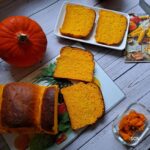
Hokkaido Pumpkin Milk Bread
Hokkaido Pumpkin Milk Bread is a soft, fluffy, and tender bread made with pumpkin purée and tangzhong for a moist, pillowy texture. For the best results, use well-strained pumpkin purée and add the milk gradually to achieve a soft, elastic dough.
Ingredients
Tangzhong
- 25 g bread flour
- 125 ml milk
Dough
- 290 g bread flour
- 150 g Hokkaido pumpkin purée cooled and well strained
- 35 g sugar
- 2 tsp instant dry yeast
- 1 egg
- 40 –60 ml milk as needed
- 1 tsp salt
- 30 g unsalted butter softened
Brushing
- Milk or egg
- 1 tbsp melted butter
Instructions
Prepare the Pumpkin Purée
- Prepare the Hokkaido pumpkin purée according to your preferred method and let it cool completely before using.
- Important: Strain the pumpkin purée well to remove excess water before measuring out 150 g for this recipe. Pumpkin purée can vary considerably in moisture content, and excess water can significantly affect the dough's hydration. If the purée is too watery, the dough may become overly sticky and require a different amount of milk or flour. For the best results, use a thick, well-drained purée.
Make the Tangzhong
- In a small saucepan, whisk together 25 g bread flour and 125 g milk until smooth.25 g bread flour, 125 ml milk
- Cook over low to medium-low heat, stirring constantly, until the mixture thickens into a smooth, pudding-like gel.
- For greater precision, aim for a temperature of approximately 65°C. At this temperature, the starches in the flour absorb liquid and gelatinise, helping the bread retain moisture and achieve a soft texture.
- Remove from the heat and transfer to a small bowl.
- Let the tangzhong cool to room temperature before adding it to the dough.
- Avoid overcooking the tangzhong into a very thick, dry paste, as this can reduce the moisture available to the dough.
Make the Dough
- In a large mixing bowl, combine the bread flour, sugar, salt, and instant dry yeast.290 g bread flour, 35 g sugar, 1 tsp salt, 2 tsp instant dry yeast
- Add the cooled pumpkin purée, egg, and cooled tangzhong.150 g Hokkaido pumpkin purée, 1 egg
- Mix until the ingredients begin to come together.
- Gradually add the milk, starting with 40 ml. Add more only if needed, depending on the moisture content of your pumpkin purée.40 –60 ml milk
- Knead for about 8 minutes until the dough begins to develop structure.
- Add the softened butter and continue kneading for another 2–5 minutes, or until the dough becomes smooth, elastic, and slightly tacky.30 g unsalted butter
- The dough should feel soft and supple without being runny or sticking heavily to your hands. Resist the temptation to add too much flour during kneading.
First Rise
- Shape the dough into a ball and place it in a lightly greased bowl.
- Cover and leave in a warm place for 60–90 minutes, or until the dough has approximately doubled in size.
- The rising time may vary depending on the room temperature.
Shape the Loaf
- Gently press the dough to release the excess air.
- Divide it into three equal portions. Shape it into balls, cover and let it rest for 10 minutes.
- Note: If the dough is sticky to handle, transfer it to a lightly floured work surface and gently shape it. Sprinkle a little flour as needed, but avoid adding too much, as this can make the bread dense and less fluffy.
- After ten minutes roll each piece into an oval, fold it, then roll it up into a cylinder.
- Place the three pieces side by side in a greased loaf pan, with the seams facing down.
Second Rise
- Cover the loaf pan and let the dough rise for 35–50 minutes, or until the dough reaches approximately 1–2 cm below the rim of the pan.
- If desired, gently brush the top with milk or beaten egg for a beautifully golden finish.Milk or egg
- Avoid letting the dough overproof, as this may affect the loaf's structure.
Bake
- Preheat the oven to 180°C.
- Bake for 30–35 minutes, or until the loaf is golden brown and fully baked.
- If the top browns too quickly, loosely cover it with aluminium foil during the last 10–15 minutes.
- Remove the bread from the oven and immediately brush the top with melted butter for a soft, tender crust.1 tbsp melted butter
- Remove the loaf from the pan and transfer it to a wire rack to cool.
- Allow the bread to cool for at least 45 minutes before slicing so the crumb has time to set.
- Enjoy this soft, fluffy Hokkaido Pumpkin Milk Bread on its own, toasted with butter, or served alongside your favourite soup.
Notes
I have also tried making this bread with unstrained pumpkin purée, and it works too! Since the purée contains more water, you may not need to add any milk, and the amount of flour needed may vary slightly depending on the moisture content of your purée. Add the liquid gradually and adjust the flour as needed to achieve a soft, elastic dough.
Tips for the Softest Pumpkin Milk Bread
- Strain the pumpkin purée thoroughly. This is especially important for this recipe. Excess moisture can dramatically change the liquid ratio, so always use a thick, well-drained purée.
- Add the milk gradually. Start with 40 ml and add more only as needed. You may not need the full 60 ml.
- Focus on the dough texture. Pumpkin purée varies in moisture, so the amount of milk needed will depend on your purée. A soft, elastic, slightly tacky dough is the goal.
- Don't add too much extra flour. A little tackiness is normal, and adding too much flour can make the finished bread dense and dry.
- Brush with melted butter. Brushing the loaf while it is still hot helps keep the crust soft.
- Cool before slicing. Give the bread at least 45 minutes to cool for the best texture.
- Lightly spiced: Add 1 tsp ground cinnamon and ½ tsp ground nutmeg to the dry ingredients.
- Savoury pumpkin bread: Add chopped rosemary, pumpkin seeds, and a little grated Parmesan cheese.
- The ideal target temperature for making tangzhong is 65°C, which is the sweet spot where flour starches gelatinize. Heat the flour and liquid mixture (typically a 1:5 ratio) while stirring until it reaches 65°C.
- Consistency Note: At exactly 65°C, the mixture should be a relatively smooth, slightly thickened gel or loose pudding. Avoid overcooking it into a very thick paste, which cooks out too much moisture.
- Cooling: Always let the tangzhong cool down to room temperature before mixing it into your final bread dough so it does not harm the yeast.